Tuesday, November 30, 2021

Ultimate Reform

Last year I made a vest with thick yarn I hand spun specifically for the project.


Unfortunately the vest was very hard ... it was more like armor than clothes...
I assume that I gave too many twist to the yarn as I spun and the yarn became too stiff.

I couldn't wear the armor but couldn't throw it away either so I decided to perform a major reform.


I unraveled the armor to make yarn. The yarn was curly so it was straightened with steam.
Then I wove this yarn into fabric. Plain double weave.


After weaving I washed, dried and pressed.


I measured and it ended up approximately 1 yard by 2 yards.
It was smaller than I expected but still destined to become a jacket.

The fabric was woven loosely comparing with the commercially available wool fabric therefore I sewed the fabric onto the lining so that it wouldn't stretch.


I heard that this way of garment construction, quilting the fabric to the lining, was used by Chanel. I don't know if it was true but it was fun to explore different kind of sewing.
If you are interested in, you can find detail of this construction in Thread magazine back issues or Claire Shaeffer's book.


This is the result.
Not bad for the salvaging armor-like vest project.


Saturday, November 27, 2021

San Francisco Bakery tour


I’m an indoor person and don’t really mind staying home.
However, this situation where I HAVE TO stay home makes me feel like that I want to go out.

Therefore, when the spread of covid virus seemed to slow down and we both were fully vaccinated, JC and I left home for San Francisco.

To make it more fun, we decided to conjure up a theme for the outing.
“San Francisco Bakery tour” was our unanimous theme.


The first stop was Breadbelly in the Richmond District, my favorite bakery in San Francisco.

You can order at the door and they have the outside dining area but it was cold that day so we ordered takeout.


Kaya Bun
Milk bread with kaya cream inside.
Delicious green color coconut spread from South-east Asia (Kaya) is under the crispy topping.

Croissant
Love the flakey texture!

Pear Danish
Poached pear in white chocolate cream flavored with sake kasu.
Dreamlike combination of crispy dough, sweet fruit and cream with a hint of heat from sake kasu which gives depth to the sweetness.
Sake kasu is a byproduct of sake. It’s very rich in flavor and usually used in savory dishes like soup or marinade.
I’m Japanese so no stranger to sake kasu but find sake kasu used this way just amazing!

Chef Kate is a petite, sweet lady but when it comes to flavor combinations she is a giant!


The next stop was Cinderella Bakery.
This Russian bakery is also in the Richmond district.


I’m always fascinated with pastries from Eastern Europe therefore was really looking forward to visiting this bakery.

It was becoming sunny and warmer so we decided to stay at the outside dining area.


Syrniki (cheese fritters) served with sour cream and jam.
Flavor is rich but the texture is so light and delicate.

Piroshki was big. We couldn’t finish all of them and took the rest home. It was still delicious the day after.

Kvas
This traditional Russian drink is made with bread, yeast, water and spices.
There is no fruit in it but it tasted like apple cider.


Both bakeries were great in different ways.

Breadbelly suggests the awesome and endless possibility of flavor combinations and Cinderella bakery offers the piece of tradition of the country which I’ve never been to.


We wanted to visit more bakeries but already had a bag full of bread to take home so I will have to come back to SF for the bakery tour part two.

Thursday, November 4, 2021

Chablis tasting with global warming

Chablis, the white wine AOC in Burgundy, France, is located at almost the northern limit for successful viticulture.
Spring frost is the constant concern and full ripening of grapes is not always guaranteed.

Their classification is divided into Grand Cru, Premier Cru, Chablis and Petit Chablis.

Grand cru vineyards occupy the best location. They sit on the famous Kimmeridgian soils and, especially important in Chablis, have good sun exposure to enable full ripening. As a result, wine is concentrated and complex and can be aged for years.

Grapes used for the production of Chablis and Petit Chablis are usually from the cool, north-facing vineyards. Fruits are less ripe and the resulting wine tends to be tart and lack concentration.

However, with global warming, the less favorable locations are becoming more favorable. The north-facing vineyard sites are now warm enough to produce fully ripe grapes constantly.

As the ripening of fruits is ensured the quality of wine improves and the production of these wines are increasing.


The other day I had an opportunity to taste these wines.


Domaine de la Tour Chablis 2019
Fresh aromas of green apple, pear, pineapple and mineral.
The fruits are riper on the palate and it was balanced with the bright acid.
Long finish.


J. Moreau et Fils Chablis 2019
Beautiful aromas of honeysuckle, pear, orange and green apple.
Finish is clean and pleasant.


Domaine Vrignaud Chablis Les Champreaux 2019
Single vineyard Chablis from the right bank of the Serein river.
Fresh aromas of lemon, lemon zest, white flower and herb.
Palate is more round like lemon confit or tropical fruits.


Domaine de la Motte Chablis Vieilles Vignes L’Authentique 2019

Old vine from the north-facing vineyard on Kimmeridgian soil.
Concentrated aromas of orange, pear, almond and seashells.
Fuller body than previous wines and the texture is round.


Domaine des Hates Chablis 2018
Complex aromas of apple, citrus, almond skin and oyster shell.
There was savoriness in the flavor with slight caramel in the aftertaste.


Domaine William Fevre Chablis 2018
Abundance of fruits like apple, peach, pear or melon.
Approachable wine which finishes with citrus zest-like bitterness.


I liked WIlliam Fevre by itself but other wines were really good with food.


Of course global warming would have its negative effect on viticulture too but for now, I enjoy the positive effect.

Thursday, October 21, 2021

Baking with Gluten-Free Flour

During the shelter in place order I did a lot of baking.
As I looked for new recipes I also looked into using different kinds of flours such as oat flour, spelt flour or chickpea flour.

One of them was gluten-free flour.
It usually consists of almond flour, rice flour, potato starch, etc..., depending on the producer. 
I assume this flour was developed for people with gluten allergy but I thought that I could probably use this for recipes which I wanted to avoid developing gluten.

To compare with regular flour I chose to make Cornish pasties which I’d been making often recently.

The flour I used is King Arthur Measure for Measure Flour.


With this flour I made the shortcrust pastry dough with flour (mixed the gluten-free flour and pastry flour with 3:1 ratio), butter, salt and cold water.

The dough was hard to come together so I had to mix a lot. I didn’t need to worry about developing gluten but still tried to work quick because I didn’t want the butter to melt.

Folding the dough into the Cornish pasties shape was the hardest part.
The dough was very crumbly and kept breaking every time I tried to fold.
I somehow managed to shape them and finished baking.


From the look it was just like the Cornish pastry I usually make.
And the flavor was like my usual Cornish pasties, too.
The texture was flaky, also almost same as the dough made with regular flour, maybe with a little bit of powdery feel.
The pastry stayed flaky even after I kneaded longer than for regular pastry dough and tasted good. 
It was just so crumbly that I don't know if I want to use this for the pastry dough again.


After working hard, I needed to treat myself with nice pairing with wine.


Bodegas Vegalfaro La Grava 2018
Spanish red wine made with 85% Bobal and 15% Macabeo.

Ripe red fruits of wine and sweetness of pork were good together.


I used this flour for other baking to experiment further.
It didn’t make good sablé (shortbread cookies). The texture was wrong - it was almost mushy.
But I found the satisfying result with granola cookies and cake salé.

Friday, October 15, 2021

Wines from the Mediterranean region

As COVID-19 vaccinations progress things are gradually going back to normal and wine tasting events start to be seen here and there.

There was a tasting of wines from Mediterranean countries in San Francisco. 


The wines are from Croatia, France, Greece, Italy, Slovenia and Spain.

The area facing the Mediterranean sea has the Mediterranean climate which means that the climate is relatively mild with low temperature difference throughout the year and the dry growing season. 

Although there is a risk of drought, the dry summer lowers the incidence of vine diseases and the warm temperature and sun can contribute to ripe fruits and full bodied wine.


Domaine Spiropoulos Ode de Panos Sparkling Brut 2019

Organic sparkling wine from Peloponnese, Greece.

Floral aromas of dried red and white flowers, spice, incense and stone fruits. 

Soft mouthfeel with sweetness and bitterness of citrus in aftertaste. 


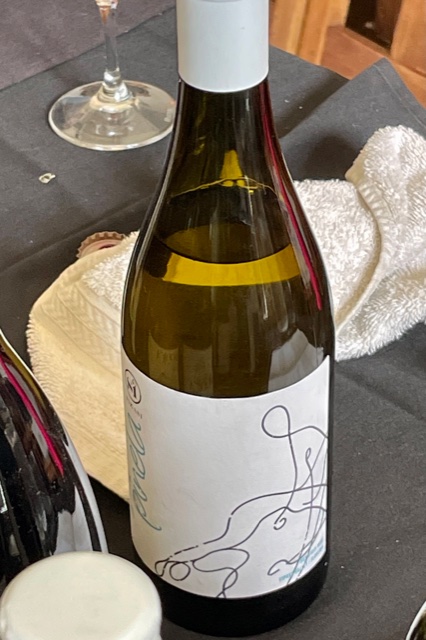
Pikasi Pinela 2019

This is my first time to try a wine from Slovenia. Exciting!

Pikasi makes naturally fermented wine with indigenous grape varieties and Pinela is one of them.

Texture is rich and the citrus zest-like aftertaste gives crispness.


Zlatan Pošip 2018

Zlatan Otok is a winery in Croatia by the Adriatic Sea. 

Pošip is a white indigenous grape variety of Croatia.

Easy to drink, likable wine with aromas and flavors of citrus and stone fruits 


Jean Diot NV Rose

Jean Diot is a Champagne producer with very small production.

Complex aromas and flavors of mushroom, strawberry and cherry with long pleasant finish.


Cascina delle Rose

This is a family-owned winery in Barbaresco.

Their Nebbiolo vines are grown on the steep hillside vineyards and tended carefully by hand. Wines are fermented with natural yeast and aged in botti (large oak barrels).


Langhe Nebbiolo 2016

Beautiful aromas of dried flowers. High, powdery tannin. 


Barbaresco Tre Stelle 2015

Concentrated aromas of tea and dried flowers which is balanced with high tannin.


Barbaresco Rio Sordo 2017

Elegant wine with aromas and flavors of dried flowers and red and black cherries which are ripe but not overripe.


Thymiopoulos Vineyards Earth & Sky

Thymiopoulos is the first certified biodynamic winery in Naoussa, Greece.

Beautiful Xinomavro (indigenous red grape variety from Greece) with a good structure. 

Tannin is high but balanced with ripe concentrated red fruits, which makes this wine approachable and very enjoyable.


Anatolikos Vineyards Natural Orange 2019

Anatolikos is an organic wine producer in Thrace, Greece. 

Their wines are not only organic, also vegan.

Uplifting aromas of orange, orange flowers and marshmallow. 

The wine finishes with tiny bitterness.


Danielle Conterno
is the fourth generation of the wine producing family from Piemonte, Italy.


Langhe Nebbiolo 2019

Grapes are from younger vines but wine has a good structure, which is balanced with ripe red fruits.


Barolo 2016

Rich aromas of red fruits, flowers and spices.

Powerful wine with high but soft tannin. 


Barolo Panerole 2016

Ripe tannin is balanced with the presence of delicate yet lively red flower, fruits, herb and tea.

Wine with power and elegance.


These are only few of the wines I tried at the tasting.

Most of the wines I had there were enjoyable with vibrant fruits and ripe tannin.

I especially enjoyed wines from Croatia and Slovenia.

They are still hard to find but definitely worth to try!


Thursday, October 7, 2021

Cristom Vineyards

When I first met JC we both liked wine but were poor students.

His go-to wine country was Livermore Valley (relatively affordable wine) and my go-to wine was whatever cheapest on the store shelf.

One summer, on the way back from attending his friend’s wedding in Washington state, we decided to drive through the Willamette valley in Oregon and visit as many wineries as possible.

Weather was beautiful, scenery was gorgeous and people were great. We enjoyed all wineries: their stories, their hospitality and of course their wines.
Especially two wineries, Cristom and Bethel Heights, stood out among them.

At the wineries they explained how terroir would affect wine as we tasted wines from different vineyards and I was really impressed by the fact that the same grape variety from the same producer could end up in wines with such different styles.
It was so impressive that I bought bottles of wine which costed more than $40.00 for the first time in my life.

Recently I had a chance to taste Cristom again when JC brought home these three bottles.


Cristom Vineyards is a family owned winery in Eola-Amity Hills, Oregon.
Eola-Amity Hills is a sub AVA of Willamette Valley AVA, on the west bank of the Willamette river. There, cooling influence from the Pacific Ocean and sites sheltered by hills provide varied conditions for wine making, and Cristom doesn't waste this advantage.


Eola-Amity Hills  Willamette Valley Chardonnay 2019
Fresh aromas of herbs, citrus, stone fruits, subtle nuts and caramel.
Round texture.
Clean bitterness of citrus zest stays in aftertaste


Eola-Amity Hills Willamette Valley Eileen Vineyard Pinot Noir 2016
Eileen vineyard experiences the cooling Pacific Ocean wind which prolongs the growing season. This helps to develop flavor while retaining freshness in fruits.
Decadence of ripe dark cherry, plum, coffee, red flowers and candied rose petals. Rich aromas and flavors are balanced with acidity.
Smooth texture with fine tannin. 
Long pleasant finish.


Eola-Amity Hills Willamette Valley Pinot Noir Mt. Jefferson Cuvée 2019
Mt. Jefferson Cuvée is a blend of grapes from their own vineyards and neighboring vineyards who partner with Cristom.
Preserved strawberry which is ripe but not jammy. Black cherry, spice and cedar box.
Good structure with powdery tannin. Full body.


It was more than ten years ago when I first tasted their wine as a wine novice. Since then I had opportunities to try great wines from all over the world.
When JC brought home bottles of Cristom I was a little afraid that I might not have found the spark which intrigued me years ago but that concern was needless. 
Their wines are still impressive.

Thursday, July 1, 2021

Tartine Manufactory

Tartine Bakery is one of the most famous bakeries in San Francisco.
It’s a twenty year old bakery which makes breads and pastries with the traditional technique but also with new ideas.


There are three Tartine bakeries in San Francisco.
Tartine Manufactory is one of them and located on the Alabama street, in the area with the industrial / hip atmosphere.

Parking is not easy around there but this day we were lucky to find a parking spot near the bakery and bought three goodies.


Pain au Jambon
This is Ham and cheese croissant.
Its texture is rich for croissant than being flaky because of the very generous amount of cheese.
The size of the croissant itself is quite generous too.
It’s a pricey pastry but makes you feel full.

Crumb cake
Moist cake and crispy crumble melted together in my mouth.

And today’s main event: Country loaf!
Beautiful color. Just looking at it makes me smile.
Nice sourdough flavor. Crispy outside, chewy inside.
When you toast it lightly, it becomes so soft!


To honor this bread we made an anchovies platter and had it with Château Maillard Graves 2018.
I thought that red Bordeaux might have been too heavy for the food but actually it was a good choice.