Showing posts with label tasting. Show all posts

Thursday, November 4, 2021

Chablis tasting with global warming

Chablis, the white wine AOC in Burgundy, France, is located at almost the northern limit for successful viticulture.
Spring frost is the constant concern and full ripening of grapes is not always guaranteed.

Their classification is divided into Grand Cru, Premier Cru, Chablis and Petit Chablis.

Grand cru vineyards occupy the best location. They sit on the famous Kimmeridgian soils and, especially important in Chablis, have good sun exposure to enable full ripening. As a result, wine is concentrated and complex and can be aged for years.

Grapes used for the production of Chablis and Petit Chablis are usually from the cool, north-facing vineyards. Fruits are less ripe and the resulting wine tends to be tart and lack concentration.

However, with global warming, the less favorable locations are becoming more favorable. The north-facing vineyard sites are now warm enough to produce fully ripe grapes constantly.

As the ripening of fruits is ensured the quality of wine improves and the production of these wines are increasing.


The other day I had an opportunity to taste these wines.


Domaine de la Tour Chablis 2019
Fresh aromas of green apple, pear, pineapple and mineral.
The fruits are riper on the palate and it was balanced with the bright acid.
Long finish.


J. Moreau et Fils Chablis 2019
Beautiful aromas of honeysuckle, pear, orange and green apple.
Finish is clean and pleasant.


Domaine Vrignaud Chablis Les Champreaux 2019
Single vineyard Chablis from the right bank of the Serein river.
Fresh aromas of lemon, lemon zest, white flower and herb.
Palate is more round like lemon confit or tropical fruits.


Domaine de la Motte Chablis Vieilles Vignes L’Authentique 2019

Old vine from the north-facing vineyard on Kimmeridgian soil.
Concentrated aromas of orange, pear, almond and seashells.
Fuller body than previous wines and the texture is round.


Domaine des Hates Chablis 2018
Complex aromas of apple, citrus, almond skin and oyster shell.
There was savoriness in the flavor with slight caramel in the aftertaste.


Domaine William Fevre Chablis 2018
Abundance of fruits like apple, peach, pear or melon.
Approachable wine which finishes with citrus zest-like bitterness.


I liked WIlliam Fevre by itself but other wines were really good with food.


Of course global warming would have its negative effect on viticulture too but for now, I enjoy the positive effect.

Friday, October 15, 2021

Wines from the Mediterranean region

As COVID-19 vaccinations progress things are gradually going back to normal and wine tasting events start to be seen here and there.

There was a tasting of wines from Mediterranean countries in San Francisco. 


The wines are from Croatia, France, Greece, Italy, Slovenia and Spain.

The area facing the Mediterranean sea has the Mediterranean climate which means that the climate is relatively mild with low temperature difference throughout the year and the dry growing season. 

Although there is a risk of drought, the dry summer lowers the incidence of vine diseases and the warm temperature and sun can contribute to ripe fruits and full bodied wine.


Domaine Spiropoulos Ode de Panos Sparkling Brut 2019

Organic sparkling wine from Peloponnese, Greece.

Floral aromas of dried red and white flowers, spice, incense and stone fruits. 

Soft mouthfeel with sweetness and bitterness of citrus in aftertaste. 


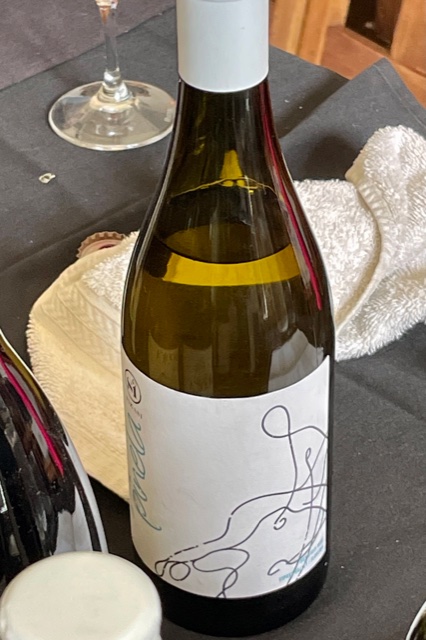
Pikasi Pinela 2019

This is my first time to try a wine from Slovenia. Exciting!

Pikasi makes naturally fermented wine with indigenous grape varieties and Pinela is one of them.

Texture is rich and the citrus zest-like aftertaste gives crispness.


Zlatan Pošip 2018

Zlatan Otok is a winery in Croatia by the Adriatic Sea. 

Pošip is a white indigenous grape variety of Croatia.

Easy to drink, likable wine with aromas and flavors of citrus and stone fruits 


Jean Diot NV Rose

Jean Diot is a Champagne producer with very small production.

Complex aromas and flavors of mushroom, strawberry and cherry with long pleasant finish.


Cascina delle Rose

This is a family-owned winery in Barbaresco.

Their Nebbiolo vines are grown on the steep hillside vineyards and tended carefully by hand. Wines are fermented with natural yeast and aged in botti (large oak barrels).


Langhe Nebbiolo 2016

Beautiful aromas of dried flowers. High, powdery tannin. 


Barbaresco Tre Stelle 2015

Concentrated aromas of tea and dried flowers which is balanced with high tannin.


Barbaresco Rio Sordo 2017

Elegant wine with aromas and flavors of dried flowers and red and black cherries which are ripe but not overripe.


Thymiopoulos Vineyards Earth & Sky

Thymiopoulos is the first certified biodynamic winery in Naoussa, Greece.

Beautiful Xinomavro (indigenous red grape variety from Greece) with a good structure. 

Tannin is high but balanced with ripe concentrated red fruits, which makes this wine approachable and very enjoyable.


Anatolikos Vineyards Natural Orange 2019

Anatolikos is an organic wine producer in Thrace, Greece. 

Their wines are not only organic, also vegan.

Uplifting aromas of orange, orange flowers and marshmallow. 

The wine finishes with tiny bitterness.


Danielle Conterno
is the fourth generation of the wine producing family from Piemonte, Italy.


Langhe Nebbiolo 2019

Grapes are from younger vines but wine has a good structure, which is balanced with ripe red fruits.


Barolo 2016

Rich aromas of red fruits, flowers and spices.

Powerful wine with high but soft tannin. 


Barolo Panerole 2016

Ripe tannin is balanced with the presence of delicate yet lively red flower, fruits, herb and tea.

Wine with power and elegance.


These are only few of the wines I tried at the tasting.

Most of the wines I had there were enjoyable with vibrant fruits and ripe tannin.

I especially enjoyed wines from Croatia and Slovenia.

They are still hard to find but definitely worth to try!


Friday, April 30, 2021

Red Wines of Irancy

It’s been more than a year since the shelter in place order took place.
As more and more people have been vaccinated, slowly and carefully shops and events are starting to open in San Francisco.

Last week I attended one of these socially distancing tasting events.


Irancy is a red wine AOC in Burgundy, France.

It’s lesser known comparing with other Burgundy red wine regions since there is no premier or Grand cru.
Its isolated location doesn’t help its recognition either. It’s just south-west of Chablis and away from the famous Côte d’Or.
However, wine producers of Irancy believed in their wine as good, and worked hard to create higher quality wine, like keeping yields low to produce concentrated grapes.
Years of their effort resulted in attaining the AOC status in 1999.

Their red wine is based on Pinot Noir but little different from the ones from Côte d’Or: it is allowed to use up to 10 % César, a red grape variety with dark color and high tannin.


Domaine de Mauperthuis Les Mazelots 2017
Pinot Noir with little Cesar.
Aromas and flavors of fresh cherry, raspberry and strawberry with spices and forest aromas in the background. 
Silky tannin.


Domaine Colinot Les Cailles 2017

Complex aromas of dark cherry, clove, coffee beans, pepper and tar. 
There is savoriness in this wine.


Domaine Clotilde Davenne 2016
2016 was a challenging vintage with frost and hail.
Fruit-driven aromas of fresh and tart cherry, raspberry and cranberry. 
Body is light.


Domaine Jean-Louis et Jean-Christophe Bersan Cuvée Louis Bersan 2016
Fragrant wine with aromas of decayed rose, strawberry and black tea. 
Powdery tannin supports the delicate flavor.


Domaine Verret Palotte 2015
Year of 2015 had hot, sunny and dry summer, but wine is still refreshing.
Red fruits aromas which is ripe but not cooked. 
Rich fruits are balanced with fine tannin.


Domaine Christophe Ferrari La Bergère 2015
Dark fruits like black cherry, black berry and cassis. 
Fruits are so concentrated, almost like Coca-Cola. 
Spices like anise and orange peel add complexity to it. 
Well structured wine with strong tannin.


These wines are exactly what the wine makers say: they are complex but easy to drink. It's good as aperitif and also good with food.

Wednesday, December 16, 2020

Prima Materia Tasting Room

Even with the shelter in place order we can still enjoy wine tasting.
Last month, we went to Prima Materia’s tasting room In Oakland.


Prima Materia is a winery in the Lake county, California. 
It is a small wine producer with a focus on the traditional style wine making and its tasting room in Oakland is also small but open for tasting with the outside tasting space.

Their tasting menu comes like this!


Chardonnay
Clean citrus/flower aromas with a little bit of bitterness of citrus zest. A hint of bruised apple. 
The texture is oily like ripe pear.

Rosé
This wine is a blend of Barbera and Aglianico.
Complex aromas of fresh coffee beans, candied rose, liquorice, red cherry and strawberry are supported by good acidity, bitterness of grapefruit and a tiny tannin of dried fruits.

Sangiovese
Freshness of mint and tomato stems, and richness of plum and bitter chocolate.
Well integrated tannin. It is a clean, easy to drink wine.

Negroamaro
Marshmallow, fresh black cherry and black olives.
The richness is blended with well integrated tannin.

Barbera
Sweet aromas of cherry blossom, herbs, cranberry and cherry.
Fruits, acid and tannin are well balanced.

Refosco
Refosco is a red grape from northern Italy.
Rich aromas of sweet tobacco, black cherry, pomegranate, cooked tomatoes and dark chocolate are balanced with a good amount of acidity.

Aglianico
Complex aromas and flavors of spice, herb, coffee, violet, cherry and raspberry.
Tannin is high but well integrated and it's easy to drink especially for Aglianico.


All of them are well-made, easy to drink wines with pleasant finish.
I don’t see any reason not to want to drink them!

Sunday, April 26, 2020

Barolo Brunello Barbaresco tasting

Before the shelter in place order took place, I attended a tasting event of beautiful Italian wines.


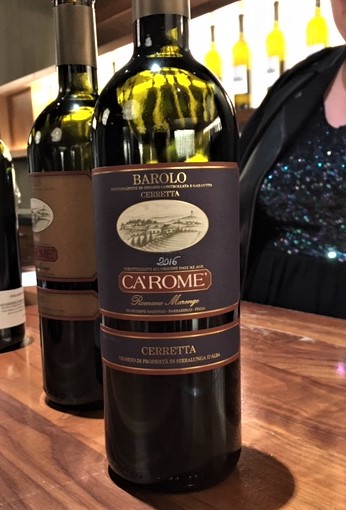
Ca'Rome Barolo Cerretta DOCG 2016
Barolo made with low yielding Nebbiolo grapes from a single vineyard.
Beautiful aromas of rose, red plum, raspberry, candied cherry, herbs and tobacco.
Elegant wine with high, powdery tannin.


Boscarelli Vino Nobile di Montepulciano Il Nocio DOCG 2016
100% Sangiovese.
Fresh red fruit, cherry blossoms, preserved plum and medicinal herbs.
Powdery tannin with refreshing acidity.


Fuligni Brunello di Montalcino DOCG 2015
Complex aromas of red fruits and savoriness of caramelized onion and smoked meat, which are backed by the firm structure.
It feels pure joy to drink this wine.


Bongiovanni
Langhe Arneis DOC 2019
Very aromatic white wine made with 100% Arneis grape, with aromas of fresh grapes, ripe grapefruit, pear and peach.
Refreshing, full-bodied wine.

Barolo Pernanno DOCG 2016
Exotic aromas of herbs and incense.
Gripping tannin was softened and became approachable when it was paired with cheese.
Good food wine.


Conterno Fantino
Barbera d'Alba Vignota DOC 2017/2018
Multi-vintage wine.
Deep sweet aromas of Amaretto and ripe red fruits.
Aroma and flavor of oak add depth to the wine.


Podei Luigi Einaudi
Barolo Cannubi DOCG 2016
Beautiful aromas of rose, chestnut and ripe red fruits
High, well-integrated tannin gives the strong backbone.
A wine with power and decency.

Barolo Bussia DOCG 2016
Complicated aromas of fresh and desiccated red fruits such as plum and cherry, quince and almond, which are balanced with lively acid and anchored by firm tannin.


Gaudio Bricco Mondalino Malvasia di Casorzo Dolce Stil Novo DOC 2018
Cute rosé wine with floral aromas, made with Malvasia Rossa.
It is sweet but not too sweet. Good to drink as aapéritif. 

They were all amazing wines.
Now I'm staying at home, remembering the wines, and thanking for the opportunity that I got to taste these wines before the corona pandemic forced all events to be cancelled.
Hope everything goes back to normal soon and we can go out and find those great wines.


Wednesday, February 12, 2020

Wrong about Bordeaux ?

When I started to drink wine more seriously, I didn't know where to start so followed the trend in the wine magazines.
The trend back then was big, rich, spicy red wine and Bordeaux wine was the most highly regarded wine at that time.
With these images paired with my lack of opportunity to taste Bordeaux wine, I had had the perception that red Bordeaux wine was big and masculine for long time.

Thankfully I have had opportunities to taste Bordeaux wine little by little, and found them not being something I had imagined. They were more elegant and feminine than big and masculine.
Maybe I had been wrong.

Union des Grands Crus de Bordeaux Tasting is the tasting event of Bordeaux 2017 vintage.
It was another opportunity for me to find what really Bordeaux wine would be like.


Chateau Citran Haut-Medoc 2017
Ripe red fruits balanced with freshness of tart fruit skin.
Coffee and incense give depth and exotic feel.
Tannin is high but easy to drink.
Haut-Medoc is the region which is lesser regarded comparing with other bigger names such as Pomerol or Margaux, but this wine was really good!


Château Gazin Pomerol 2017
Concentrated fresh rose, cherry and apricot are embraced by fine-grained tannin.
Beautiful aromas and texture.


Château Rouget Pomerol 2017
Lively aromas of fresh and ripe strawberry and red plum are supported by firm tannin. 
Bittersweet spice adds twist and dried flower gives elegant feel.


Château Gruaud Larose Saint-Julien 2017
Aromas of red fruits, dried orange peel, mint and spice. 
Tannin is beautifully integrated. Decent wine.


Château Léoville Barton Saint-Julien 2017
Concentrated red fruits, spice, coffee and meatiness which are balanced with fine-grained tannin. 
It is rich but so well balanced that it’s easy to drink.


Château Bastor-Lamontagne Sauternes 2017
Fresh citrus, citrus peel and apricot. 
It is a sweet wine but not too sweet. 
This wine can be good as an aperitif.


Most of wines we tasted this day were more elegant than powerful.
JC said that they were classic examples of Bordeaux. 
I guess I had been wrong indeed. 

Sunday, February 2, 2020

First tasting of the year

I wonder why things seem different at the beginning of the year. 
I know it's just number ... 2019 became 2020 ... but, somehow, it always feels special to attend the first tasting of the new year: everything, wine, glasses, even the faces I usually see at these events, is ... luminous.

This year, it was Burgundy and Rhone wine tasting. 

These are the wines which are especially luminous to me at this event.


Domaine Marc Roy Gevrey-Chambertin Vieilles Vignes 2018
Liveliness of cranberry, raspberry, rose and black pepper is balanced with firm structure.
The liveliness is like a pleasant explosion in my mouth!
Great wine and great with Camembert cheese.

Domaine Marc Roy Gevrey-Chambertin La Justice 2018
Flavors of high quality cranberry, red plums and raspberry which are embraced by subtle oak and fine grained tannin.
Its creamy texture is like velvet.


Laurent Fayolle Hermitage Les Diognieres 2017
Abundance of aromas and flavors of flower, red fruits, potpourri and black pepper are supported by fine-grained tannin.
Elegant wine.


Joseph Colin Chevalier Montrachet Grand Cru 2018
Old vine Chardonnay grown on very steep slopes.
Complex aromas of almond, almond flower, marzipan, apple and orange zest.
Just enough amount of acidity, not overwhelming. 
Good food wine.

Joseph Colin Puligny Montrachet Le Trezin 2018
The vineyard is at the highest altitude in Puligny.
White flower, orange zest and lemon with high acidity.
There is tenderness which reminds me of natural wine. 


Charlene et Laurent Pinson Chablis 1er Cru Montee de Tonnerre 2018
Freshness and bitterness of grapefruit is balanced with acidity.
Minerality of flint and stone adds depth.
Interesting wine with long finish.


When I think back all the wines after these tastings and choose the memorable ones, Chablis is usually not one of them.
I of course love Chablis but trying crisp Chablis with other wines, richer, more complex white wine is easier to pick. However, this day, this Chablis wine stood out.

Monday, December 30, 2019

Dom Perignon to end the year

You need bubblies to end the year properly.

There are many different sparkling wines, such as Prosecco, Cava, Cremant, etc., made with different methods and from international or local grapes.
They all give the festive feel and fresh and friendly characters: perfect drink to welcome the brand new year.


I enjoy all of them, but when I had a chance to attend a small tasting of  Dom Perignon at Leo's Oyster Bar in San Francisco, I felt, once again, that Champagne is in a class of their own.
Even the wines made with the same method and grape varieties, no other wines can recreate the Champagne's delicacy.

I tried Brut and Rose, both 2006 vintage.


The bubbles are crispy and delicate, creating velvet-like soft texture.
The bubbles and flavor stay long and pleasant in the mouth.
They show freshness and complexity at the same time, which makes this wine good by itself, also great with food.


Dom Perignon is one of the most famous Champagne brand.
It is always a vintage wine and it means that it is made only in good years and not in poor vintages.
This is not an easy task since Champagne's location is at the northern edge for the wine producing region. Although the cool temperature helps to retain high acidity, ripening of grapes can be challenging in some years.

Having a great wine made under this strict condition at the end of the year was a good idea.
It gave me an opportunity to stop, think and prepare to gather myself and jump into the new year!

Monday, December 9, 2019

Saint-Emilion 2016

There was a tasting event of Saint-Emilion 2016 (and some other) vintages in San Francisco.

Saint-Emilion is in the Right Bank of Bordeaux.
Soils in the Right Bank is more clay soil than in the Left Bank, and Merlot is the dominant grape, which is suited to the cool soil.

According to the Association de Grands Crus Classes de Saint-Emilion, 2016 had cool, wet spring and hot and dry summer.
Cool night-time temperatures around the harvest time helped grapes to retain freshness as they became fully ripe.

Here are some of the wines I liked.


Chateau Ripeau 2016
Chateau Ripeau is located near Chateau Cheval Blanc and close to the border with Pomerol.
Fruits are restrained but has beautiful expression.
Aromas of fruits, exotic incense and spices are supported by good amount of acid and tannin.
A wine with a sense of decency.


Chateau Jean Faure 2016
50% Cabernet Franc, 45% Merlot.
Smooth texture with high, fine-grained tannin.
Aromas are complex: floral and meaty at the same time.
2014 vintage had clean perfume of flower and fruit.
I really liked both of them.


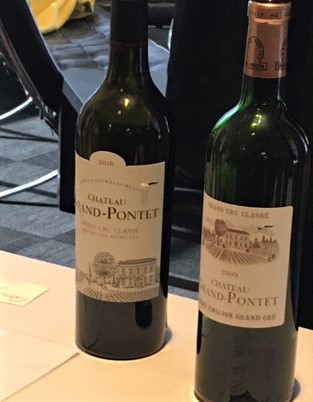
Chateau Grand Pontet 2009
Chateau Grand Pontet is located in the western plateau of St-Emilion.
Rich aromas of ripe fruits, sugar-coated flowers and coffee, which are supported by well-integrated firm but tender tannin


Chateau Grand Corbin 2012
Chateau Grand Corbin is located on the northwestern part of the St-Emilion plateau.
Beautiful combination of concentrated red and black fruits and spice.
Powdery tannin and acid are well balanced.
Finish is long and pleasant.


Chateau Chauvin 2016
Chateau Chauvin has a long history in St-Emilion and had undergone restructuring of the viticultural and winemaking techniques under the new ownership since 2014.
Beautiful wine. It is strong yet delicate.

Overall impression of 2016 vintage was the wine with vibrant and charming flower and fruits with smooth tannin.
It is approachable now but with firm structure, these wines would be long-lived.

Wednesday, November 20, 2019

Red wines from Germany

Germany is famous for its white wine.
The cool climate of Germany is suited to the production of white wine with crisp acidity and fresh fruits characters. However, popularity of German red wine has been increasing.

There was a promotional tasting event and I got to taste two German red wines there.


Weingut Borell-Diehl Pfalz Pinot Noir 2017
Pinot Noir from Pfalz.
Pfaiz is located between the Rhine river and the Haardt mountain range. The mountains protect the area from the rain-bearing westerly winds therefore it is relatively warm and dry comparing with the other German wine regions. Red grape varieties can thrive in this climate and about one-third of wine produced in Pfalz is red.

Vibrant red cherry and cranberry stay long on the palate and finish cleanly.
Approachable, friendly wine.


Weingut Knauss La Boutanche Trollonger Wurttemberg 2018
Trollinger is a red grape variety originally from Italy, called Schiava there.
This bright ruby color wine is made with organic methods and low intervention.

The aromas and flavors of fresh flower, strawberry and thyme are balanced with sharp acid of cranberry.
The lightness of body supports the fresh characters.


Both of them are clean and fresh, and reasonably priced.
Worth a try! 

Monday, April 22, 2019

White wines from Portugal

When I hear "Wines of Portugal", the first thing comes into my mind is Port wines.
Like these beautiful wines from Kopke.


Layers of dried fruit, flower, nut, caramel, chocolate, backed with strong structure.
Rich and smooth texture.

However, Portugal has much more to offer.

The size of Portugal is not big comparing with other wine producing countries like Spain or France, but it has variety of topography from mountains to coast and variation in climatic effect. In fact, Portugal has the largest number of microclimates per square kilometers in the world!
The country receives Atlantic, Mediterranean and continental influences. These, together with aspects, soils and altitude, affect the styles of wine.
Moreover, Portugal had most indigenous grape varieties planted per km² in the world.
This is not a mere sales pitch. The combination of different terroirs and different grape varieties are reflected in the wines.

To catch a glimpse of the reflection, I had a chance to taste four different styles of white wine from Portugal.


Sogrape Azevedo Loureiro - Alvarinho DOC Vinho Verde 2018
Vinho Verde is in the north of Portugal with strong Atlantic influence (very wet), and known for its white wine with crisp acid.
Grapes are Loureiro and Alvarinho.
Refreshing citrus, tropical fruit and white flower with long finish.
The acidity was so bright that it was like jumping into my mouth.

Casa Americo Quinta do Vale DOC Dao 2018
DOC Dao is surrounded by high mountains and protected from cold winds and storms.
Wine is made with Malvasia Fina, Bical, Encruzado.
White flower, peach, citrus, ginger with a hint of flintiness.
Texture is creamy and mouth-coating.

Wine & Soul Guru DOC Douro 2017
Douro is the region known for the famous Port wine, but the quality of table wine has much improved and it has been gaining popularity.
Alyssum, orange, fresh and bitter grapefruit, and subtle sweetness of ripe citrus.
High acid is balanced with ripe fruit and round texture. Aftertaste is pleasant.
This interesting wine, which is my favorite of the day, is a field blend. It means that different varieties planted in a vineyard are vinified together.
Grapes are local Gouveio, Rabigato, Viosinho, Codega do Larinho... all unfamiliar names.
This wine is a great find: such a delicious wine made from obscure (sorry!) grapes.

Esporao Reserva Blanco DOC Alentejo 2017
Grapes are Antao Vaz, Arinto, Roupeiro.
Classic white blend from Alentejo, the region experiences strong continental influence (hot summers and cold winters).
Honeysuckle, ripe tropical fruit with medium acid.
Full-bodied with mouth-coating texture.

These four white wines were so different.
From refreshing and aromatic to rich, full-bodied wine, made with different grapes grown on different terroirs.

Portugal has history of wine making since 2000 BC but there are still many unfamiliar, undiscovered things to explore in their wines, like a treasure box!

Wednesday, February 13, 2019

Aligoté from Burgundy

There is a concept of Old World and New World in wine.
Old world is, basically Europe, where wine has been produced and consumed for long time.
New world is everywhere else, like US, Australia, or Chile.

In practical point of view, one of the big differences of new and old world is whether there is a strict regulation about permitted grape. These grapes grown on the terroir of old world for long time have become like a synonym to the region such as Cabernet Sauvignon and Bordeaux, or Sangiovese and Chianti.

Burgundy has its famous synonymous grapes: Pinot Noir and Chardonnay. But there are other grapes which are permitted in Burgundy.
White grape Aligoté is used for the regional wine of Burgundy.
Wine from Aligoté has fresh aromas of flower and fruit, and is meant to be drunk young. 
Aligoté is not particularly picky about the growing condition, and grown on lesser vineyards (best sites are saved for Chardonnay). This and less recognition can mean Aligoté wine is much more affordable.

There was an event to taste this white Burgundy wine, potentially a good alternative to Chardonnay.


Domaine Catherine et Claude Marechal Bourgogne Aligoté 2017
The wine with concentrated fruit aromas is made from 40 or more year old vines.
Honeysuckle, acacia, fresh melon, peach, green apple and citrus aromas. Soft acid.
It's fresh, clean wine.

Caves Bailly-Lapierre Bourgogne Aligoté 2016
Nectar-like fruit of apple and peach.
Lean, light bodied wine with smooth texture.

Domaine Manuel Oliver Bourgogne Aligoté 2016
Acacia, jasmine, ripe citrus and peach.
High minerality, almost saline.


Domaine Pierre-Louis et Jean-Francois Bersan Bourgogne Aligoté 2015
Aromas of green apple and pear.
Delicate wine with soft texture.

Maison Louis Jadot Bouzeron 2015
Aligote aged in new oak.
Fresh Asian pear, hazelnut, smoke and cedar. Refreshing acid.

Domaine Les Champs de Themis Les Corcelles Bouzeron 2016
White flower, pear, peach and apple.
Round texture with long finish.

Bouzeron is a village in Cote Chalonnaise, only village appellation made from Aligoté.

There is a reason that Chardonnay is the principal grape of white Burgundy. It's harder to find good Aligoté than good Chardonnay. 
My first positive encounter with Aligoté was when it was recommended at Kermit Lynch (importer/retailer) some years ago. It was strikingly lovable. I immediately went back to the store to get more but it was already sold out. The wine was that good.
So, the best way to find good Aligoté is to ask wine shops. Or, find one of the bottles I tasted this day. These are all good, aromatic wine with body and soft acid, and good food wine, especially with seafood and vegetables.

Tuesday, February 5, 2019

Bordeaux 2016 Vintage

There are many things which can define the character of wine: grape variety, soil, climate, timing of harvest, or of course wine making techniques.

Vintage is also a big factor. According to wine journalist Jacky Rigaux, terroir determines the wine's originality and the vintage determines the quality of wine.
However, it is hard for me to grasp the sense of vintage, probably because it changes every year or a relation of a cause and effect involved in vintage is too complicated. Or probably because I'm not good with numbers.

There was a tasting of Bordeaux Grand Cru Classe 2016 vintage in San Francisco. Perfect opportunity to taste wines from the same vintage. It was wet at the beginning of the year and summer was very hot in 2016 Bordeaux. Hopefully I can grasp at least a tiny bit of the idea of vintage.

There were classified wines from all over Bordeaux, and these are the wines memorable to me.


Chateau Giscours Margaux 2016
Cherry, raspberry, chocolate, hints of pyrazine.
Wine is powerful yet decent and approachable.


Chateau Prieure-Lichine Margaux 2016
A chateau founded by monks in 12th century.
Red plum, raspberry, herb and soft tannin.
Pretty wine, makes me feel like dancing!


Chateau Gruaud Larose Saint-Julien 2016
A second growth in 1855 Bordeaux Classification.
Red fruit, coffee candy and spice.
Tannin is smooth and the texture is soft.
The label design might not be modern but gives a sense of old days' elegance, and the wine tastes like its label.


Chateau Talbot Saint-Julien 2016
Pleasant aromas of red fruit, flower and herbs.
The wine is with fine-grained tannin and very approachable.
It is hard not to like this wine!


Chateau de Pez Saint-Estephe 2016
The beautiful chateau was originally a hunting lodge then expanded to produce wine. Now it is owned by the champagne house Louis Roederer.
Fresh aromas of red fruit and flower are backed by notes of coffee.
It is firm wine with strong but fine tannin. Very enjoyable.


Chateau Phelan Segur Saint-Estephe 2016
Aromatic wine with fresh and dried floral, cherry, cranberry characters.
Strong tannin presence, which is more reliable than aggressive.


Chateau Clarke Listrac-Medoc 2016
Listrac is a commune in Medoc, lesser known than other big names like Margaux or St-Julien. High water table in the area and shallow root system as its result work as disadvantage, but this wine proves that great wine can be made under such a condition.

A little unusual for Medoc, majority of the grape in this blend is Merlot.
Notes of ripe red fruit, spice, coffee.
Clean, full-bodied wine with gripping tannin.


Chateau La Lagune Haut-Medoc 2016
A third growth in 1855 Bordeaux Classification.
Beautiful aromas of fresh cherry, plum and purple flower.
Bitter sweet coffee-like after taste.

There were also beautiful white wines.


Chateau Carbonnieux Pessac-Leognan 2016
A chateau of long history with the Benedictine monks as the first owner.
Refreshing citrus and tropical fruit notes with savory characters of lees.
Long, clean finish.


Chateau Olivier Pessac-Leognan 2016
Candied citrus, melon and peach.
Delicate wine with strong finish.

The characteristics of vintage is still vague for me, but I felt a difference.
Overall impression, St-Julian was most memorable for 2016. At the last years tasting, which was the tasting of 2015, I found Margaux most attractive.
Even though I don't understand how, but I must have had detected the difference between vintages.