Wednesday, October 19, 2016

Mamete Prevostini, Alpine Nebbiolo

There was a Mamete Prevostini Alpine Nebbiolo comes to Vintage Berkeley event at Vintage Berkeley.


Mamete Prevostini is a winery in Valtellina, which is a narrow alpine valley in Lombardia, Italy.
The principal grape variety is Nebbiolo.

Mamete Prevostini Botonero. $21.50.
Fresh tart and candied red fruit. Rose water.
Acid was high and tannin was moderate.
It reminded me of Beaujolais.

Mamete Prevostini Sassella Valtellina Superiore. $36.50.
Tart black fruit and dried flower.
Fine medium tannin.
Sassella is the most famous sub-region of Valtellina.

Mamete Prevostini "Sommarovina" Sassella Valtellina Superiore. $66.
Sommarovina is a single vineyard.
Cherry or strawberry compote. Herbs such as mint, camomile and sage.
This vineyard is located at higher altitude then the previous Sassella.

Mamete Prevostini  "Albareda" Sforzato di Valtellina. $75.
Cherry brandy. Fig and raspberry compote. Smoked ham.
Full body and very fluid.
Sforzato is the wine made from partially dried grapes.
All elements in the grapes are concentrated. There is a high level of sugar and they are fermented until it's dry, so the wine is full body, high in alcohol, and flavors are concentrated.

All the wines were good, and probably good to drink now.
Valtellina is a steep area that everything has to be done by hands.
Maybe that's why but it seemed a little bit overpriced for my preference.


Saturday, October 15, 2016

Formidable Dragon

How to choose when you want to try new cocktail? The look? The ingredients?
I choose from its name.

JC wanted to make a new cocktail from his beloved Smuggler's Cove Cocktail book, so I chose the one called Formidable Dragon. Why not?


The recipe calls Lemon juice, Lime juice, Honey Syrup, Molasses Syrup, Amaro di Angostura, 3 kinds of Rum, and Seltzer.

We didn't have some of the ingredients, so he substituted Amaro Ciociaro for Amaro di Angostura, and used Kuromitsu (Japanese black honey) instead of Molasses Syrup.

Kuromitsu is usually served with traditional sweets. Although it tastes similar to molasses, it has distinctive flavor. 
I was a little skeptical how it would work as a cocktail ingredient, and sure detected distinctiveness in the cocktail, but it wasn't bad. It actually gave exotic flavor.

It was heavy so I had to mix constantly so that the Kuromitsu wouldn't stay on the bottom of the glass, but otherwise, I surprisingly enjoyed this cocktail. 

Wednesday, October 12, 2016

La Carraia Orvieto 2015

I usually choose and open wines which coordinate with JC's study, but sometimes food comes first then I choose wine to pair with.

Today, JC cooked Steamed Salmon and Garlic-flavor Mashed Potatoes, and I happened to have a perfect wine for this.

La Carraia Orvieto 2015

Orvieto is the most famous wine from Umbria.
40% Grechetto. 30% Procanico (Trebbiano), 30% Malvasia.

Trebbiano has neutral flavor and adds acidity.
Grechetto gives character.

Fruit and sweet white flower. Orange oil-like richness.
This was the wine I tried at the Italian wine tasting last week.
Very good wine and very good deal.

I thought the pairing was successful.
The acid and rich texture went good with the fatty fish.
Although the pairing was good, I like this wine just by itself, too.


When pairing is good, I tend to eat too much.
After the dinner, I felt stuffed and needed remedy...

Amaro Ciociaro and Amaro Sibilla.
Sweet spice and herb helped my stomach to calm down.

Saturday, October 8, 2016

Central Italian Wine: A Guided Tasting

There was Central Italian Wine: A Guided Tasting at Solano Cellars this week.
This was a sequel to the last month's Southern Italian Wine Tasting.
There were two white wines and five red wines.


Falesco Est! Est!! Est!!! di Montefiascone 2014
This is from Lazio.
Citrus zest, pear, and acacia-like sweet flower.
Est! Est!! Est!!! is not usually my favorite wine, but this one was good.

Second white wine we tried was La Carraia Orvieto 2015
(picture of this wine is on the bottom of this page)
Wine from Umbria.
Grape fruit and grape. White flower. Neutral and easy to drink.
Everybody there loved this wine.
Very approachable and only $12.
Good deal. Very good deal.

The first red wine was Valle Reale Abruzzo 2010.
100% Montepulciano, from the vineyard on the top of the mountain.
Cherry-like fruit and very fine tannin.

Di Majo Norante Ramitello Molise Rosso 2012. 
85% Montepulciano and 15% Aglianico.
Aroma was very flowery. Violet, rose, and dark cherry.
Good balance.

Castellare di Castellina Chianti 2014. From Toscany
95% Sangiovese and 5% Canaiolo.
Strawberry, raspberry, fennel and shiso.
The bird on the label is a local bird which is on the verge of extinction.
The description of this bird is on the label, too.
They use the label to raise awareness of the disappearing species.
I liked this idea and wanted to like this wine, but unfortunately it wasn't my favorite (not a bad wine, just personal preference).

Altesino Rosso di Montalcino 2014.
100% Sangiovese.
Cherry and herb. There was earthiness.
Tannin was higher side but very fine.

Altesino Brunello di Montalcino 2011.
100% Sangiovese.
Tart fruit and fresh flower.
Tannin was high but well integrated and balanced.
Elegant wine.

Like Last month, lovely Chloe from Winebow lead us through this Central Italian Tour.
There were so many people but she handled beautifully without losing the personal touch.


Here's the wines I brought back home:
La Carraia Orvieto 2015 and Di Majo Norante Ramitello Molise Rosso 2012


I look forward to finding another favorite at the next Northern Italian Tasting!


Friday, October 7, 2016

Wine making

It's been two weeks since I started wine making with Cabernet Sauvignon from the garden.
The fermentation stopped so it's time to bottle.

First, drain the wine (can I call it wine?) and separated free-run and pressed juice.
Free-run tasted like red fruits.
Low tannin and medium acid.
Alcohol was low, so the grapes weren't ripe enough when I harvested them (I needed more sugar = ripeness to achieve higher level of alcohol).
Pressed juice had more greenness.

I mixed the half of the pressed juice into free-run, and let it settle in a fridge over night.

We did tasting with the left over pressed juice.

Here's JC's tasting note:
Green pepper, apple skin, cherry liqueur, licorice, thyme, red pepper cone, compost, wet clay.
Medium tannin, medium plus acid, low alcohol (8%?), silky body, a little bit of volatile acid.
Wow, it sounds like real wine!

My comment is...it tasted more like cider than wine.

Next day, we bottled the wine (can I really call it wine?) using coffee filter.
I have no idea how long I should let it age, but we decided to wait at least until next year to try.
What's gonna happen...?

Thursday, October 6, 2016

Pair with Saffron

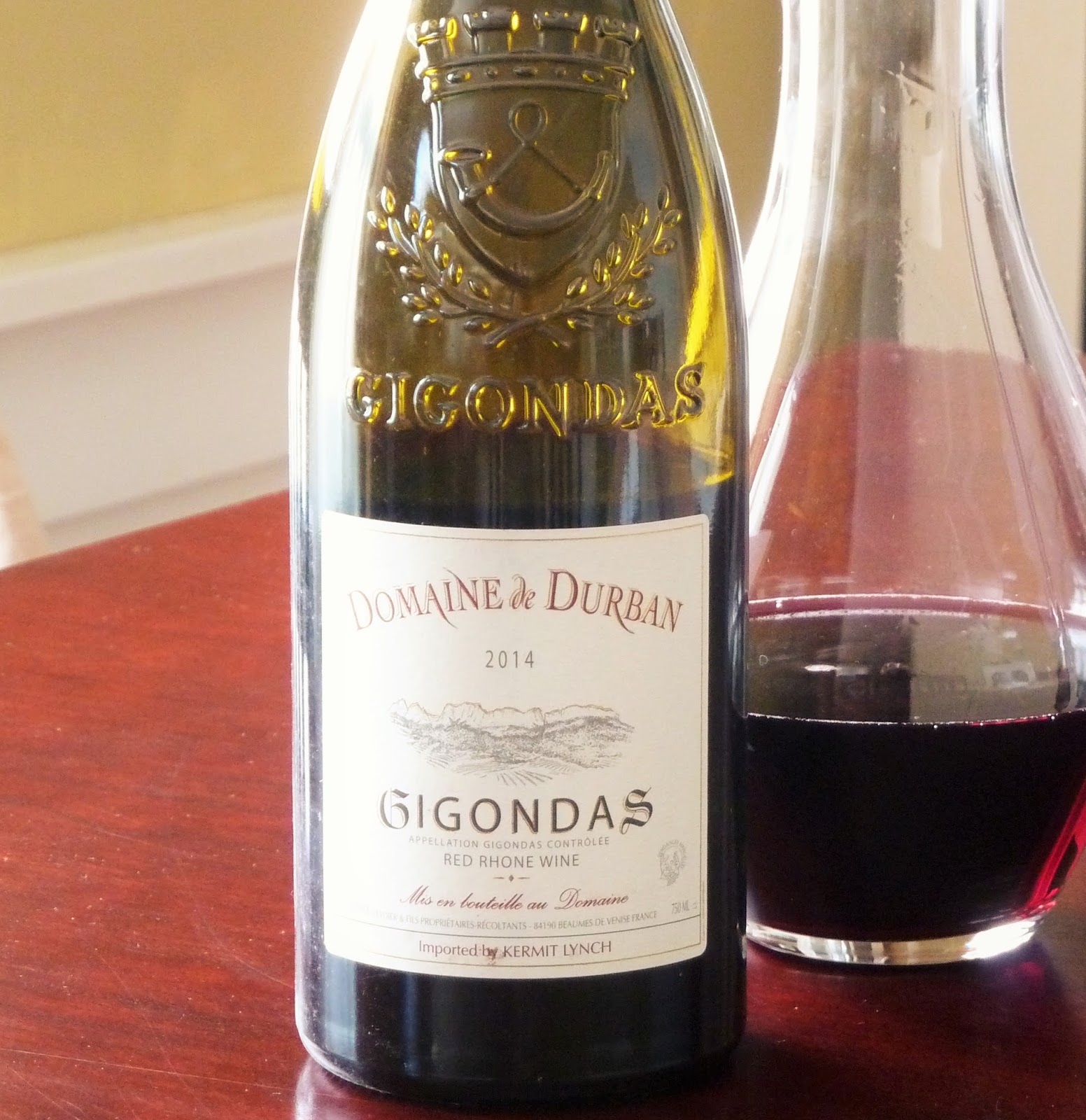
Domaine de Durban Gigondas 2014
Red wine from the Southern Rhone, France.

70% Grenache, 30% Syrah.  
Purple color with medium intensity of aroma.
Cherry, cramberry, violet and spices such as nutmeg, licorice, cardamon, etc.
Tannin was higher side, but fine in texture.

We had this wine with Bacon and Tomato Sauce Pasta with saffron.
It wasn't a bad pairing, but not a great pairing either.
I thought Gigondas and bacon would be a nice pairing...
JC suspected that saffron and the wine didn't work well together.
Because the wine was too strong for the subtle flavor of saffron? Maybe.
Saffron might need some kind of sweetness which comes from oak-ageing like Rioja.
This can be my next pairing theme.
  

Tuesday, October 4, 2016

Home Remedy

Tamago-zake is a home remedy in Japan.
This is believed to work when you caught cold.

First, warm up Sake.
Mix egg and sugar (not as sweet as eggnog), then pour hot sake into it and mix well.
Drink up, and go sleep.

However, I find this drink too strong to drink when I feel weak, so JC made me his version of home remedy when I was sick in bed.

Lemon juice, Passion fruits juice, Liqueur, Gin.
Lots of Vitamin C.
The simple structure made it easy to drink.

Did it really work? Well, at least I'm here.